Navigating Deck Penetration Variability in Card Counting for Mobile Blackjack Platforms
Written by Kai Beck · Aug 16, 2026
Navigating Deck Penetration Variability in Card Counting for Mobile Blackjack Platforms
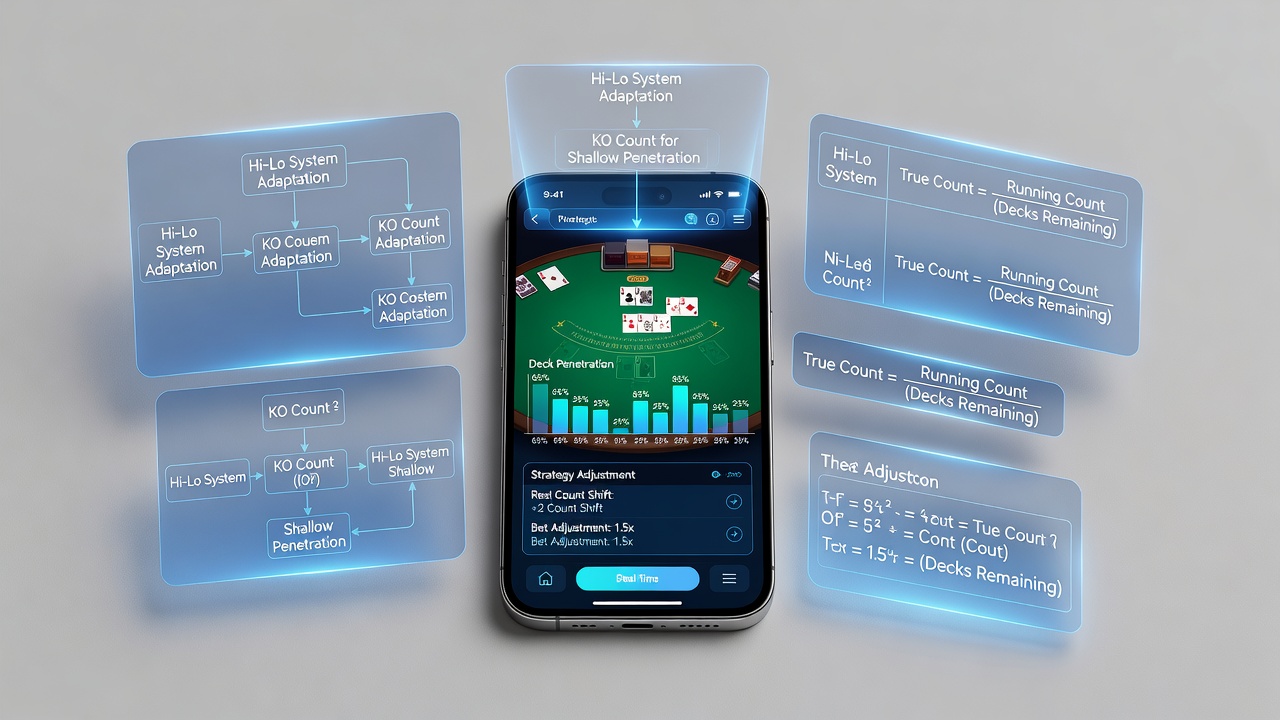
Deck penetration refers to the proportion of cards dealt from a shoe before reshuffling occurs, and mobile blackjack applications often adjust this parameter dynamically to balance house edges with player engagement, according to data from the Nevada Gaming Control Board. Players who track running counts must recalibrate their betting ramps and index numbers when penetration shifts mid-session, since shallower cuts reduce the frequency of high-count opportunities while deeper ones amplify them. Research indicates that systems like Hi-Lo and KO require multiplicative adjustments to true count calculations, with the conversion factor changing as remaining decks decrease at irregular intervals in app-based simulations.
Core Mechanics of Penetration in Digital Environments
Mobile platforms frequently implement variable penetration through algorithmic triggers that respond to real-time metrics such as session length and aggregate player behavior, and these mechanisms differ from fixed rules in physical casinos. Observers note that a 75 percent penetration threshold might suddenly drop to 60 percent after a sequence of low-count rounds, forcing counters to lower their wager spreads to maintain positive expected value. Studies from academic sources reveal that the player advantage in a six-deck game rises approximately 0.15 percent for every additional 10 percent of penetration when the count remains favorable, yet this gain erodes quickly if the software enforces early shuffles without warning.
System-Specific Adaptations for Shifting Depths
Hi-Lo practitioners divide the running count by the estimated remaining decks, but variable penetration demands ongoing recalibration of that divisor because the app may reveal or conceal deck information through visual cues or side panels. Those who apply the KO system, which avoids true count conversion, still modify their key count thresholds upward when penetration contracts, since fewer cards left in play compress the distribution of remaining high-value cards. Data shows that side-counting aces becomes more critical under shallow penetration because the absence of a single ace alters the count-to-edge mapping more dramatically than in deeper shoes.
Researchers at institutions focused on probability modeling have documented that penetration variance introduces additional volatility to bet sizing decisions, and counters respond by widening their deviation charts to account for the reduced sample size of cards seen before reshuffle. In practice, one study revealed that players who pre-program penetration-aware spreadsheets into their devices achieve more consistent results across sessions where the cut card position moves by as little as five percent between rounds.
Software Tools and Real-Time Adjustments
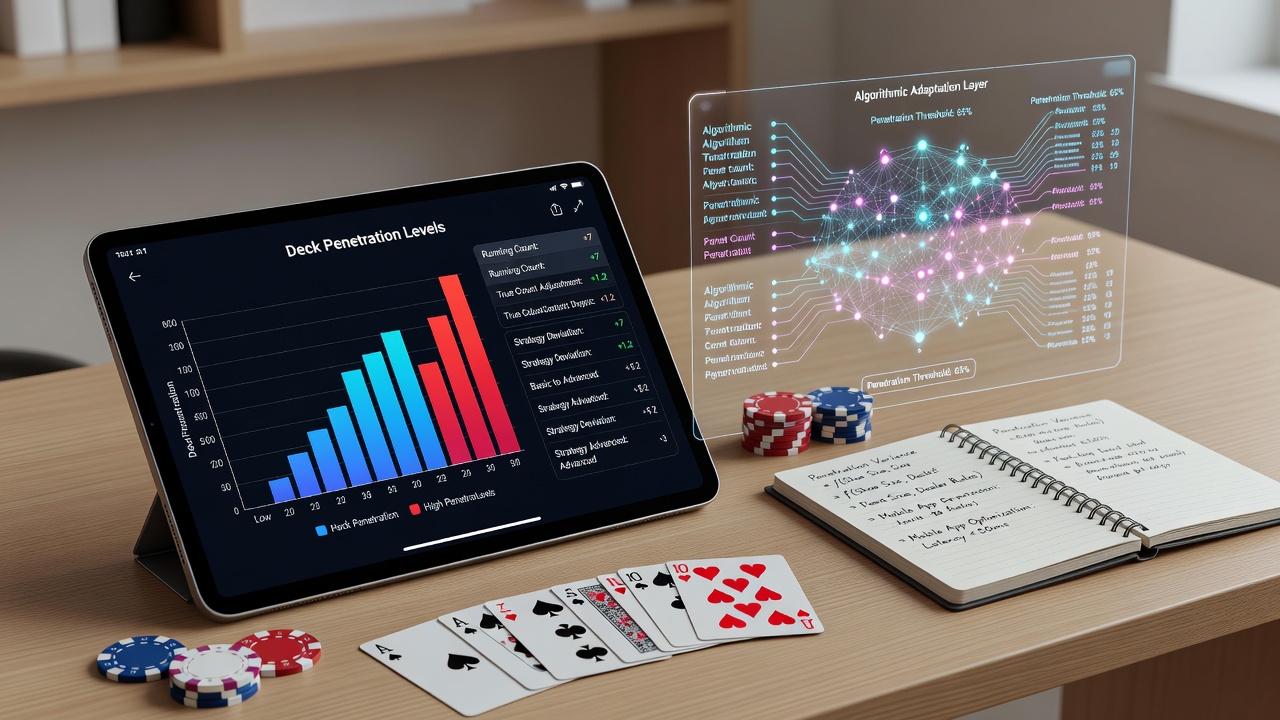
Applications released or updated around August 2026 began incorporating penetration estimators that display estimated remaining decks alongside the count, allowing users to apply dynamic multipliers without manual calculation. These features integrate with existing strategy engines so that index plays shift automatically when the software alters the shoe depth mid-shoe. Figures from industry reports indicate that such tools reduce error rates in true count conversion by up to 22 percent compared with static methods, particularly during periods when penetration fluctuates rapidly due to server-side randomization.
Yet the same reports highlight that over-reliance on automated aids can mask fundamental misreads of the count itself, since the underlying running count must remain accurate regardless of penetration settings. Players who cross-reference app outputs with independent deck estimation techniques maintain an edge even when the platform changes cut positions without prior notice.
Regulatory Context and Implementation Patterns
Regulatory frameworks in multiple jurisdictions require transparency around penetration parameters, and the Victorian Commission for Gambling and Liquor Regulation in Australia has examined how digital platforms disclose these variables to participants. Compliance data from that region shows that operators must log penetration changes and make historical averages available upon request, enabling counters to build historical profiles of each app's behavior. Similar requirements appear in Canadian provincial oversight documents, where emphasis falls on preventing undisclosed alterations that could systematically disadvantage systematic bettors.
Conclusion
Adapting card counting systems to variable deck penetration in mobile blackjack applications centers on continuous recalibration of true counts, index numbers, and bet spreads in response to algorithmic cut decisions. Evidence from regulatory filings and probability studies demonstrates that success depends on integrating real-time estimation tools with disciplined manual tracking rather than depending solely on either approach. As platforms evolve their penetration logic, the core requirement remains accurate observation of cards dealt and precise adjustment of strategy parameters to the actual remaining deck quantity at each decision point.