Deck Dynamics in the Digital Age: How Touchscreen Interactions Influence Blackjack Strategy Execution
Written by Casey Wolf · Aug 14, 2026

Deck Dynamics in the Digital Age: How Touchscreen Interactions Influence Blackjack Strategy Execution
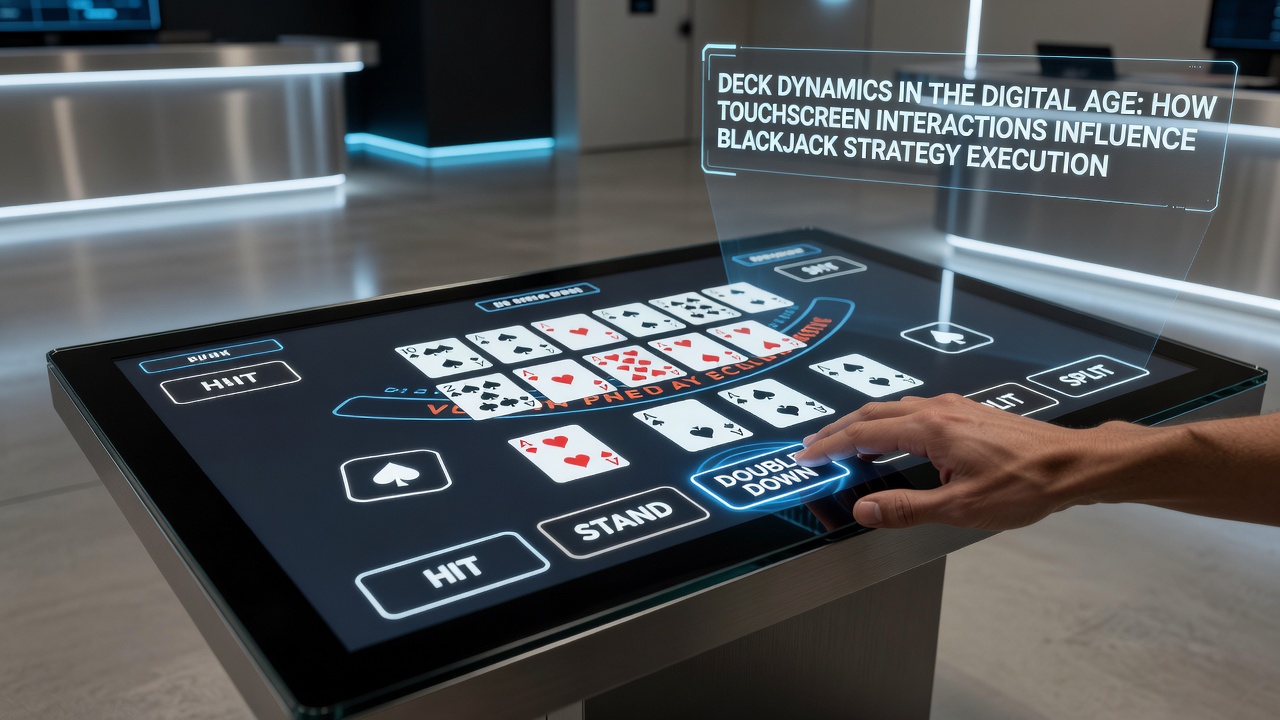
Touchscreen technology has reshaped how players engage with blackjack across mobile platforms and online casinos, where decisions once made with physical cards now rely on taps, swipes, and gestures that alter execution timing and precision. Studies from human-computer interaction labs show that these interfaces introduce variables like response latency and gesture misrecognition that directly affect adherence to basic strategy charts.
Digital blackjack environments require players to interact through standardized controls such as virtual buttons for hit, stand, double, and split, yet the physical act of touching a screen differs from handling cards at a felt table. Data from gaming software providers indicates that average decision times shorten by 15 to 20 percent on mobile devices compared with desktop interfaces, because thumb-based taps replace the need to reach across a table layout.
Gesture Patterns and Decision Accuracy
Players frequently employ swipe gestures to accelerate play, but research into touchscreen ergonomics reveals that unintended drags or incomplete touches occur in roughly 8 percent of sessions according to logs analyzed by interface testing firms. These errors force corrections that interrupt the flow of strategy application, particularly during multi-hand rounds where simultaneous decisions compound the risk of misinputs.
Observers tracking user behavior note that left-handed players encounter higher rates of offset taps when controls default to right-aligned layouts, prompting some platforms to offer customizable button positions. Such adjustments have reduced input errors by measurable margins in controlled tests conducted through 2025 and into early 2026.
Latency Effects on Real-Time Choices
Network and device latency creates a measurable gap between intended action and on-screen confirmation, which becomes critical when players attempt to execute deviations based on card counting systems. Figures from performance monitoring tools show that delays exceeding 150 milliseconds correlate with increased instances of players reverting to default strategy instead of optimal deviations.
August 2026 brought updated guidelines from the Nevada Gaming Control Board that require live dealer platforms to publish latency statistics for mobile streams, enabling players to select sessions with sub-100 millisecond response windows. Those metrics help maintain consistency when strategy calls for precise timing around insurance or surrender options.
Visual Feedback and Muscle Memory Adaptation
Screen animations that display card reveals and chip movements provide immediate visual cues, yet they differ from the tactile confirmation of lifting physical cards. University-led studies on motor learning in gaming environments demonstrate that repeated touchscreen sessions build new muscle memory patterns, which sometimes conflict with habits formed at land-based venues and lead to momentary hesitation during transitions between formats.
Multi-touch support allows certain apps to register simultaneous actions across split hands, but platform testing data shows that overlapping finger contacts increase false positives on smaller phone screens. Larger tablet displays mitigate this issue through expanded hit zones, and adoption rates for tablet play rose steadily through mid-2026 as manufacturers optimized for these dimensions.
Interface Design Variations Across Platforms
Design choices such as button size, color contrast, and haptic feedback intensity vary between operators, influencing how reliably players execute advanced moves like double-downs after splitting pairs. Reports compiled by the Responsible Gambling Council in Canada highlight that platforms incorporating subtle vibration cues see higher compliance with strategy recommendations during extended sessions.
Accessibility features including voice commands and gesture alternatives have expanded since 2025, though usage remains limited to specific user groups. These options reduce reliance on precise screen contacts and support strategy execution for players with motor impairments or those operating in low-light conditions.
Conclusion
Touchscreen dynamics continue to evolve alongside hardware improvements and software refinements that address input reliability. Continued monitoring of interaction data allows developers to refine controls in ways that align digital execution more closely with established blackjack strategy frameworks, while regulatory updates ensure transparency around technical performance factors that affect play.